Poly-B Plumbing and Home Insurance in Sherwood Park: What Buyers and Sellers Should Know
Most buyers walking through a 1980s or '90s home in Sherwood Park brace for the inspection. They picture a cracked furnace heat exchanger or a roof nearing the end of its life, something an inspector points to with a flashlight and a raised eyebrow. That's the risk everyone prepares for.
The risk that's actually stalling deals right now doesn't show up in the inspection report. It shows up two weeks later, when the buyer's insurance broker calls to say the policy can't be bound as written, and the financing condition clock is already running.
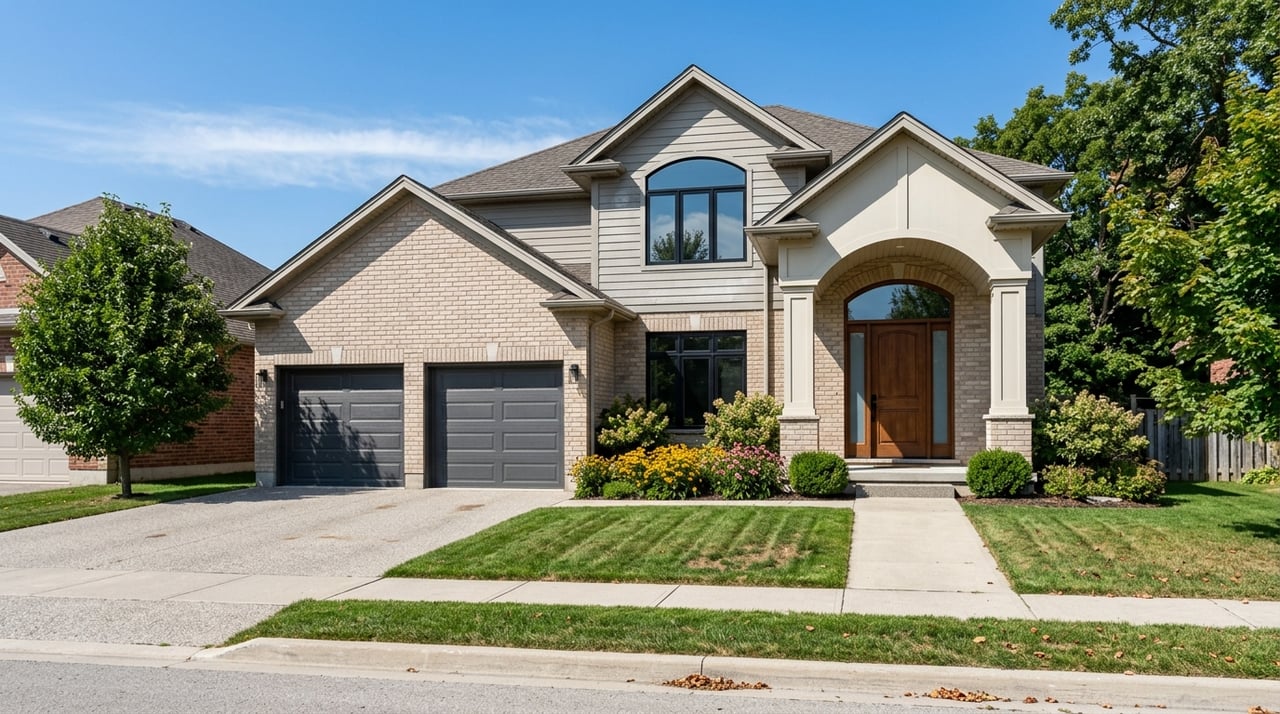
Sherwood Park's housing stock grew fastest through the 1980s and 1990s. Subdivisions like Heritage Point, Village on the Lake, Nottingham, Clarkdale Meadows, and The Estates of Sherwood Park were built out during exactly that stretch, and that timing matters more than it used to. Roughly 1985 through the late 1990s was the peak installation window for polybutylene piping, the grey plastic plumbing known in the trade as poly-B, across Alberta. A typical three-to-five bedroom detached home from that era in Sherwood Park, especially one with a finished basement, is a reasonable bet to still be running on it.
Poly-B isn't new information to anyone who's bought or sold in this price range before. What's changed is what happens once it's found.
Poly-B degrades from the inside out as chlorine-based compounds in treated water attack the pipe wall, which means there's no way to judge its condition just by looking at it. In Alberta specifically, that process runs faster than in most of the country. Edmonton and Calgary both treat municipal water with chloramine, a disinfectant that's more chemically persistent than the standard chlorine used elsewhere, and insurers underwriting Alberta properties have been pricing that into their risk models for years. It's part of why Alberta carriers tend to take a harder line than insurers in provinces like British Columbia, where limited coverage with riders and inspection documentation is still sometimes available. In Alberta, the more common outcome is a straight denial until the piping is gone.
The inspection isn't the moment that matters. It's everything that happens after.
| Stage | What poly-B triggers |
|---|---|
| Listing | Nothing yet, unless the seller's own insurer has already flagged it at a prior renewal |
| Home inspection | Flagged as a standard finding, not a structural failure |
| Financing condition period | Buyer's insurance broker can't bind a standard policy, or binds one with a 30-to-90-day replacement clause |
| Mortgage approval | Mark Herman notes that a lender may attach a condition requiring proof of full replacement coverage before funding |
| Closing | If insurance isn't resolved, the financing condition can't be satisfied on schedule |
That middle row is where most of the actual damage happens. A buyer who assumed poly-B was an inspection footnote finds out, days before their financing condition is due to be removed, that their insurer wants the piping gone or wants a signed commitment to replace it within a set number of days tied to a contractor's timeline. That's not a hypothetical clause. It's the kind of wording mortgage brokers in Alberta routinely see come back on approvals for homes in this exact vintage: proof of coverage that includes full replacement cost for the poly-B system, plus disclosure to the insurer that the piping exists at all.
If the insurance piece doesn't get resolved in time, the buyer's options are a rushed repipe or a financing extension. None of those are ideal outcomes 48 hours before a closing date.
Before assuming a home is affected, it helps to know what you're actually looking for. Poly-B is usually grey, though it sometimes shows up blue, black, or white, and it's flexible enough to bend by hand in a way copper never does. Look for stamped markings on the pipe itself, things like "PB2110" or "CSA-B137.8." Most Alberta installations used copper or brass insert fittings with soft copper crimping rings, which is a different setup than the grey plastic acetal fittings that have a higher failure rate in some other regions.
None of this replaces a licensed inspection or a plumber's assessment. It's just enough to know what question to ask before you're three weeks into a deal.
If a Sherwood Park home does need a full repipe, the cost isn't uniform, and where a given house lands on the range often comes down to the same features that make these neighbourhoods desirable in the first place.
A full job typically runs 10 to 14 days from quote to closed permit, with the plumbing itself done in a day or two and drywall, texture, and paint taking another day or two after that. An unpermitted repiping job can void insurance and resurface as a problem at the next resale. A permit is the document a future buyer's insurer will ask to see.
Compare that planned cost to what happens if the pipe fails first: a single fitting failure behind a wall, undetected for even a short time, commonly runs $15,000 to $40,000 in water damage remediation. The math on getting ahead of it isn't close.
If your Sherwood Park home was built in that 1985-to-late-'90s window and you haven't already addressed the plumbing, the most useful thing you can do before listing is find out where you stand with your own insurer now, not after an offer is in. A seller who's already replaced the piping can hand a buyer's agent a completed permit and a clean bill of health, which removes the financing-condition risk before it ever becomes a negotiating point. A seller who hasn't can at least walk into pricing conversations knowing what a buyer's lender is likely to ask for, instead of getting surprised by it during a live deal.
Our guide to preparing to sell a Sherwood Park family home covers the broader pre-listing checklist. If plumbing age is a question mark on your property, it belongs on that list before the sign goes in the yard. And if you're weighing whether a repipe is worth doing before you list versus pricing it into the sale, that's exactly the kind of conversation we walk through as part of our sellers guide.
If you're shopping in Sherwood Park's established neighbourhoods and you love a home from this era, don't let the plumbing question wait until the financing condition deadline is already ticking. Ask your insurance broker to quote the property, not just the borrower, as early in your condition period as you can. If poly-B is confirmed, get a firm number on replacement cost and timeline before you decide whether to negotiate it into the price or walk away. Our closing costs guide for Alberta homebuyers is a useful starting point for budgeting the kind of unplanned line item a repipe can become.
Does every home from this era in Sherwood Park have poly-B? Not every one, but homes built or replumbed between roughly 1985 and the late 1990s are the ones worth checking. Some homes in that window were built with copper instead, and some poly-B systems have already been replaced by a previous owner.
Can I still get a mortgage on a home with poly-B? Usually yes, but expect a condition attached to the approval, often proof of insurance coverage that includes full replacement cost, or a signed commitment to replace the piping within a set number of days after possession.
Does this affect condos too? Less often. Poly-B issues are far more common in detached single-family homes, since that's where most of the original 1980s and '90s installations happened.
If you're weighing a move in Sherwood Park, whether you're pricing a sale on a home from this era or trying to figure out what a favourite listing might actually cost you once financing and insurance are factored in, The Anderson Co. can walk through the specifics with you. Start your moving experience with a free home valuation and we'll help you get ahead of the questions that actually stall a deal, not just the ones on the inspection checklist.
This article is general information, not legal, tax or financial advice. Consult a qualified professional about your situation.

Through curated systems and a collective approach, we deliver a positive experience in one of the most significant transactions of your life. Establishing foundational relationships built on trust, education, transparency and fun, we are committed to supporting our clients in a successful real estate journey. Contact us today!