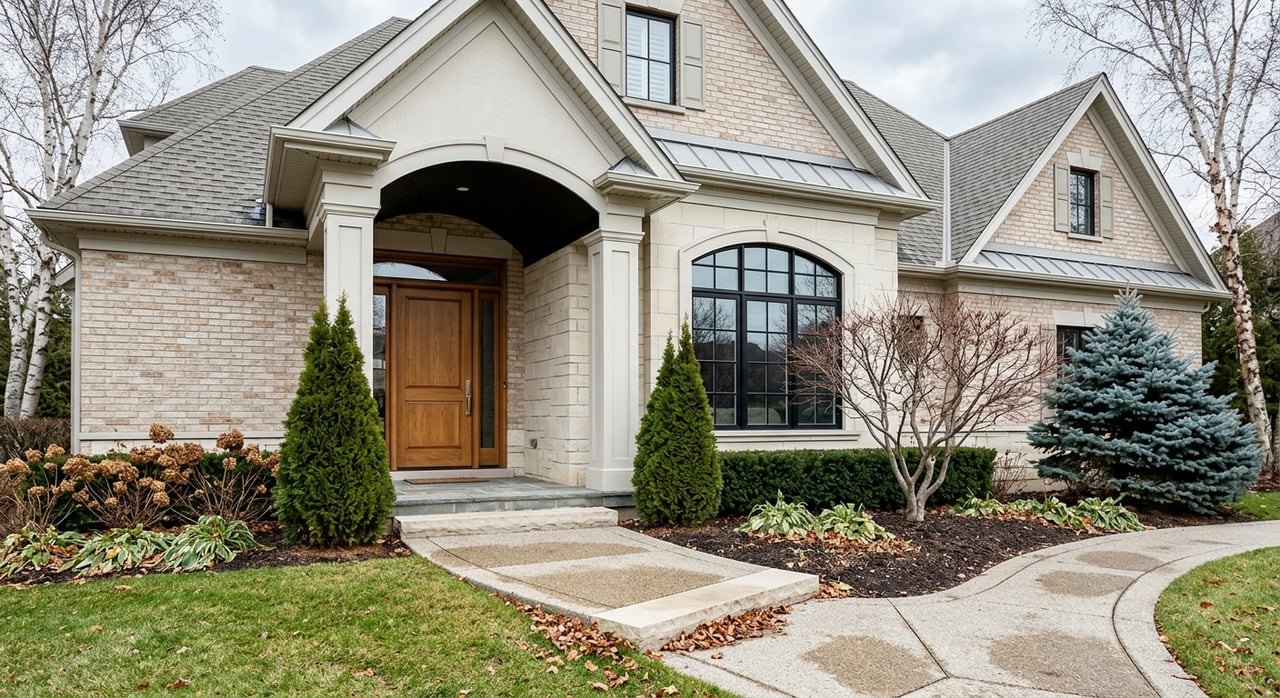
For Move Up Buyers in Edmonton, Buy First or Sell First?
Wondering whether you should buy your next home before you sell your current one? If you are a move-up buyer in Edmonton, that question can feel huge because the timing affects your budget, stress level, and negotiating power. The good news is there is no one-size-fits-all answer, and with the right plan, you can make a smart move with more confidence. Let’s dive in.
If you are moving up in the Greater Edmonton Area, today’s market gives you more options than it did a year ago. In February 2026, the market recorded 1,606 sales and 3,020 new listings, while inventory was 34.6% higher than February 2025, according to the latest REALTORS® Association of Edmonton market update.
That increase in inventory can help if you need more choice in your next-home search. At the same time, the market is still active, and in January 2026 homes averaged 59 days on market, which means timing still matters for both your sale and your purchase.
For many move-up buyers, the decision also comes down to the price gap between the home you own now and the home you want next. Based on the January 2026 local market data, detached homes averaged $485,223 in Leduc, $529,750 in Beaumont, $641,410 in Southwest Edmonton, and $707,578 in St. Albert.
That gap can be especially important if you are moving from a condo or townhouse into a detached home. In Southwest Edmonton, row or townhouses averaged $280,844 and apartment condominiums averaged $248,874, which shows why many buyers need the proceeds from their current sale to make the numbers work smoothly.
For many Edmonton move-up buyers, selling first is the safer starting point. It gives you a clearer picture of your actual sale price, your net equity, and what you can comfortably spend on the next home.
That clarity matters because selling comes with costs that can affect your bottom line. The Financial Consumer Agency of Canada notes that selling costs can include legal fees, mortgage discharge fees, real estate fees, repairs or renovations, inspections, appraisals, moving costs, staging, and cleaning.
There is also your mortgage to think about. According to the FCAC guidance on prepayment penalties, you may face a penalty if you pay off your mortgage before the end of the term, and that fee is often the higher of three months’ interest or the interest rate differential.
When you sell first, you can calculate those costs before you commit to your next purchase. That can make budgeting easier and reduce the risk of carrying two housing payments at once.
Selling first is often the better fit if:
In today’s Edmonton-area market, this approach can be especially helpful if you want flexibility. With more inventory available, there may be more homes to choose from after your sale is firm, even if you need to move quickly once you start shopping seriously.
Buying first can work well when the next home is too important to miss. Maybe you have been waiting for a specific home style, a certain area, or a layout that rarely comes up, and you do not want to lose it while you wait for your current home to sell.
The main tool that can make this possible is bridge financing. According to TD’s overview of financing between homes, bridge financing is designed to cover the gap between two closings, usually for up to 90 days, and can use the equity in your current home to help cover costs like the down payment on your new one.
In most cases, you will need a sale agreement for your current home, a purchase agreement for the new one, and approval for the new mortgage. That means buy-first is usually not something to figure out after you find the house. It works best when your financing plan is already lined up.
The biggest upside is control over your next move. You can secure the home you want instead of hoping it is still available later.
The downside is risk. TD notes that bridge loans often have interest rates similar to open-rate mortgages, which can be higher than what you are used to, and if your sale falls through, you may need to carry two mortgages until your current home sells.
Buying first may be more realistic if:
Mortgage portability can be an important part of the plan. The FCAC recommends asking whether your mortgage is portable, since porting can help reduce or avoid prepayment penalties. CMHC also notes that for CMHC-insured loans, portability may reduce or eliminate the insurance premium on the new insured loan in certain situations.
The buy-first versus sell-first question looks different depending on where you are moving from and to. A homeowner moving from Leduc or Beaumont into Southwest Edmonton or St. Albert is often stepping into a noticeably higher detached-home price range.
Using the January 2026 averages, a move from a detached home in Leduc at $485,223 to a detached home in St. Albert at $707,578 creates a much bigger gap than a move within the same general price band. That kind of jump can make your sale proceeds more important and can push many buyers toward a sell-first strategy.
On the other hand, if you are moving up from a Southwest Edmonton townhouse or condo into a detached home, the right answer depends on your equity, your mortgage details, and how comfortably you can manage the timing gap. The price difference alone does not decide it, but it does show why careful planning matters.
There is another layer to this decision, and it is the structure of your offer. In Alberta, most offers are conditional, and the Real Estate Council of Alberta says that conditions must be written with an exact explanation and a deadline.
Those conditions can include financing, an inspection, or the sale of your existing home. If the condition is not waived by the deadline, the offer becomes void and a new contract is needed.
For move-up buyers, a subject-to-sale condition can reduce risk because you are not fully committing until your current home sells. The trade-off is that this type of offer may be less appealing to a seller than an offer with fewer conditions.
If you buy after your current home is already sold, your offer may be simpler and more competitive. That can matter when you are trying to secure a home that has strong interest.
If you buy before you sell, adding a home-sale condition may protect you, but it can also weaken your position. This is one reason strategy matters just as much as timing.
If you are not sure which route fits you best, start with three practical questions:
Do you need the money from your current home to buy the next one?
If yes, selling first is often the cleaner and safer choice.
Can you handle short-term overlap if your sale and purchase do not line up perfectly?
If no, selling first may reduce stress and financial pressure.
Is the next home highly specific or difficult to replace?
If yes, buying first may be worth exploring with a solid financing plan.
In the current Edmonton market, more inventory gives you some breathing room, but it does not remove the need for a clear strategy. For many households, sell-first is the lower-risk default. Buy-first can absolutely work, but usually when the financing is prepared in advance and the household can manage the added risk.
A smart move-up plan often starts with understanding your home’s likely sale value, your mortgage terms, and the realistic price range for the area you want to move into. That is where strong local advice and a clear game plan can make a big difference.
If you are weighing your next move in Edmonton, Beaumont, Leduc, St. Albert, or nearby communities, The Anderson Co. can help you build a plan that fits your timeline, budget, and comfort level, starting with a clear look at your current home’s value and the options in your target area.





Through curated systems and a collective approach, we deliver a positive experience in one of the most significant transactions of your life. Establishing foundational relationships built on trust, education, transparency and fun, we are committed to supporting our clients in a successful real estate journey. Contact us today!